Overview
About the program
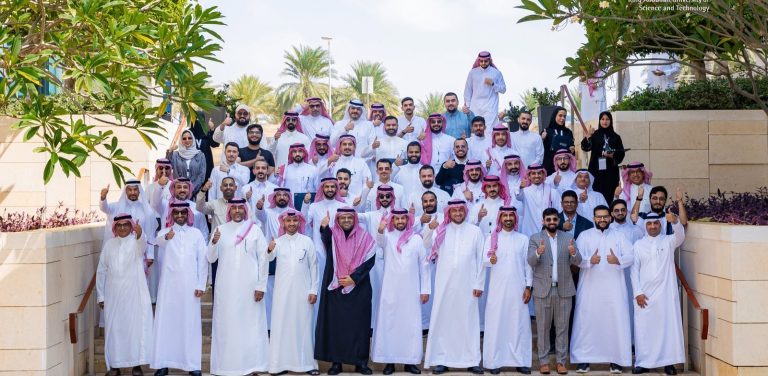
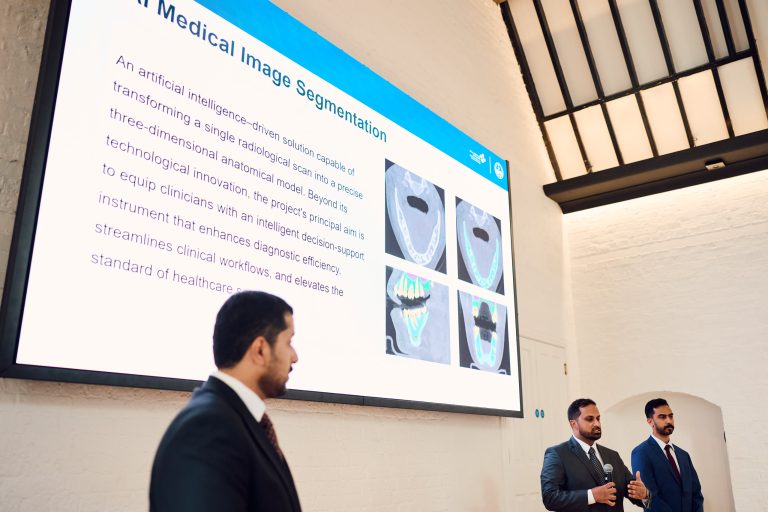
Laser Safety & Technology is a hands-on course at KAUST for groups from universities, research institutes and technical teams. It brings together what you need to understand laser systems and what you need to work with them safely: classroom teaching, demonstrations and supervised laboratory practice connect laser fundamentals with alignment, measurement and fault diagnosis.
The course is run by KAUST’s Lab Equipment Management (LEM), with HSE and CERP laser engineers. It goes from foundation to advanced level, and its length and depth are agreed with each group.
Safety and technology together
Laser safety, practical engineering and laser technology in one course.
Supervised lab practice
Guided alignment, measurements and diagnostics on real equipment, where safety allows.
Tailored to your group
From short awareness sessions to focused workshops and multi-day training.
The course
Program structure
From preparation and fundamentals to supervised practice and assessment.
Before the visit
Preparation and safety readiness
Safety induction
Agree the learning objectives, review the participants’ backgrounds, complete the required safety induction and confirm the laboratory activities and access.
Classroom and demonstrations
Foundations: safety and technology
Taught sessions
How lasers work, the hazards they present and the controls used in a research environment, connected to real equipment.
Guided hands-on learning
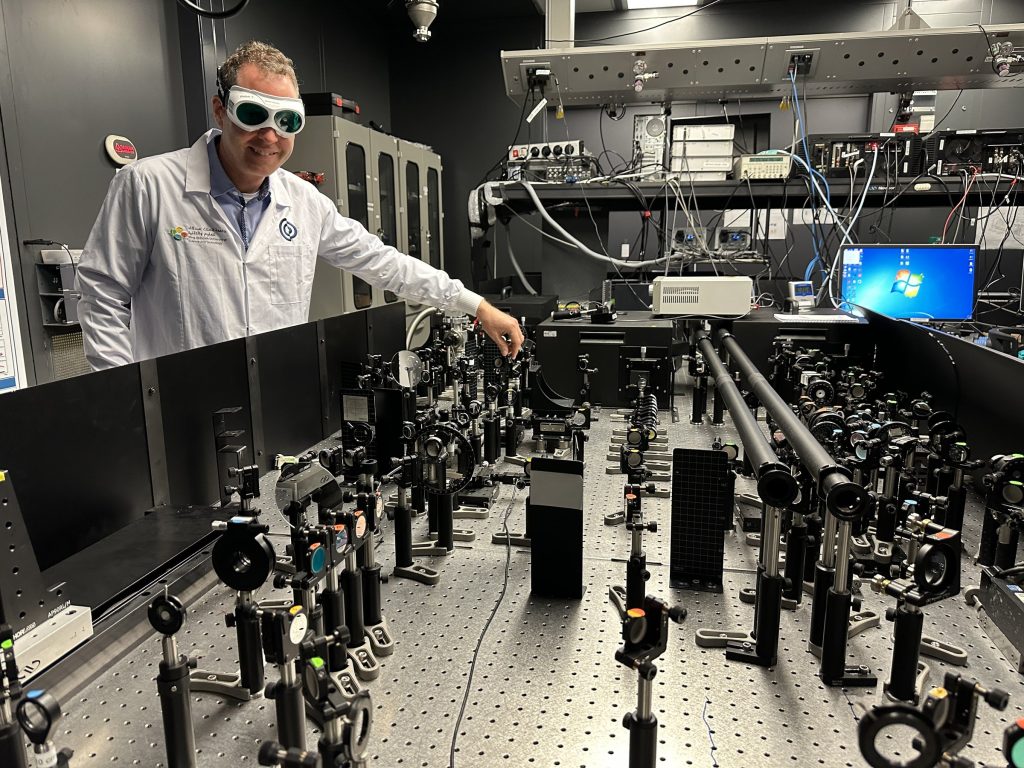
Supervised laboratory practice
In the lab
Guided alignment, measurements and diagnostics, with group rotations set around the equipment available and safe supervision.
Knowledge checks and review
Assessment and learning review
Instructor feedback
Quizzes, discussion and a practical review suited to the syllabus, with feedback from the instructors.
Safety comes first: completing the course does not replace site-specific training or authorize independent laser operation. Hands-on work remains subject to KAUST procedures and instructor approval.
Curriculum
What you’ll learn
The modules are chosen to suit the group’s background, objectives and laboratory scope.
Laser fundamentals
Stimulated emission, laser architecture, resonators, and continuous-wave and pulsed operation, connecting system design to performance.
Laser safety
Hazard recognition, laser classes, control measures, protective equipment, local procedures and safe working practices, with HSE input.
Optical systems and alignment
Optical components, beam propagation and delivery, and supervised alignment exercises matched to the laboratory risk assessment.
Measurement and characterization
Power and energy measurements, beam assessment and diagnostic tools, and reading measurements against the system’s expected behavior.
Troubleshooting and maintenance
A structured way to find faults, check optical paths and understand the limits of maintenance. Repairs need separate authorization.
Applications and industry insight
Examples from research and technical operations, lab visits and guest talks from laser-industry experts, when available.
Skills you’ll gain
- Recognizing hazards
- Explaining system behavior
- Planning safe measurements
- Following supervised alignment procedures
- Interpreting diagnostics
- Communicating findings
Who it’s for
Requirements
A group from a university, research institute or technical teamThe depth is adapted for students, researchers, laboratory engineers and technicians. Introductory outreach groups can have a separately scoped format.
Basic physicsRecommended for the technical sessions. No previous laser experience is needed: prerequisites are reviewed when the course is scoped.
Safety requirementsLab access and hands-on activities depend on local safety requirements, participant readiness and instructor approval.
Group bookings
How to apply
Email LEM
Write to LEM@kaust.edu.sa with your organization, the number of participants, their academic or technical background, your preferred dates, your learning objectives and the laser technologies you work with.
Agree the scope
The course team works with you to agree the duration, depth and laboratory activities.
Prepare and visit
Participants complete the required safety induction, then come to KAUST for the course.
Teaching and delivery
Teaching team
LEM brings the laser technology, practical engineering and diagnostics; HSE and CERP laser engineers add safety and technical expertise, connecting responsible working practices with real laboratory systems. Guest talks from laser-industry experts add perspectives from industry, when speakers are available.
Assessment may include knowledge checks, quizzes and a final review. Attendance, assessment and certificate requirements are set out for each agreed format. A certificate does not replace institutional authorization or equipment-specific training.
Research and applications
Laser research at KAUST
Lasers are at work across KAUST’s research. A few examples, by field:
- Solar energy and ultrafast materials science: transient absorption spectroscopy, streak-camera time-resolved photoluminescence and four-dimensional ultrafast electron microscopy.
- Combustion, clean fuels and flow diagnostics: particle image velocimetry (PIV), planar laser-induced fluorescence (PLIF) and Raman and Rayleigh diagnostics of ammonia flames.
- Environmental sensing and industrial safety: early warning of lithium-ion battery failure, selective hazardous-gas detection and distributed optical-fiber sensing.
- Quantum photonics and optical communication: quantum emitters and nanophotonic devices, integrated semiconductor lasers and high-speed underwater laser communication.
- Bioscience, microscopy and cell analysis: STED super-resolution microscopy, single-molecule fluorescence imaging and multi-laser flow cytometry.
- Laser fabrication and functional materials: pulsed laser deposition, two-photon printing of micro-optics on optical fibers and laser-induced graphene temperature sensors.
- Analytical chemistry and materials characterization: Raman spectroscopy and photoluminescence, femtosecond laser-ablation ICP-MS and MALDI high-resolution mass spectrometry.
Where laser skills are used
In research and in industry, laser skills matter in:
- Laser cutting and precision drilling
- Laser welding and joining
- Metal additive manufacturing and repair
- Laser marking and surface processing
- Semiconductor inspection and optical metrology
- Laser spectroscopy for chemical analysis
- Fluorescence microscopy and flow cytometry
- Ultrafast spectroscopy and multiphoton imaging
- Optical communication and photonic integration
- LiDAR and laser ranging
- Industrial gas monitoring and safety sensing
- Medical and ophthalmic laser systems
The research examples come from published work and facility information, and don’t confirm that an instrument is available today. The course doesn’t replace machine-specific authorization, laboratory procedures or clinical qualifications.
Questions
FAQs
Who can book?
Universities, research institutes and technical groups. The course team reviews the participants’ backgrounds and objectives to agree a suitable format.
How long is the course?
The length and depth vary, from introductory awareness sessions and focused workshops to multi-day training. The schedule is agreed with each group.
Will participants work with real lasers?
Yes, with supervised laboratory learning where appropriate. The activities depend on safety clearance, participant readiness, the equipment available and instructor approval.
Do participants need previous laser experience?
No. The course suits different levels of experience. Basic physics is recommended for the technical sessions, and prerequisites are reviewed when the course is scoped.
Does the course authorize independent laser operation?
No. Taking part, or a certificate, does not replace institutional authorization, local safety induction or equipment-specific training.
How do we book a group?
Email LEM@kaust.edu.sa with your organization, group size, the participants’ background, your learning objectives and preferred dates.