
Overview
About the program
The Master of Engineering (MEng) in Cybersecurity covers the field from its foundations to advanced practice: cryptography, network and systems security, web application security, cloud computing and digital forensics, through courses and hands-on labs.
KAUST offers it to organizations, not to individual applicants. The organization nominates its employees; those admitted join as KAUST students, follow KAUST’s standard curriculum and are taught by KAUST faculty. KAUST currently runs the program for the Ministry of Interior.
A KAUST qualification
Graduates earn a Master of Engineering awarded by KAUST.
At your organization
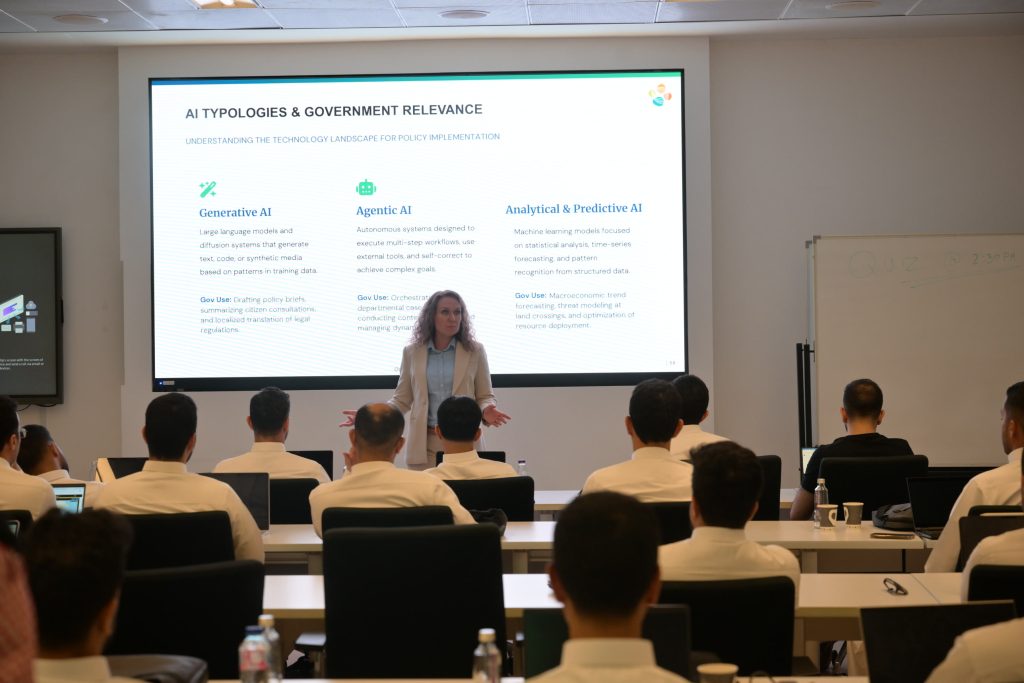
Classes run on weekends at the organization’s own venue, so employees keep working while they study.
Projects on your challenges
Each student’s capstone project applies cybersecurity to a real need of their own organization.
Admission
How students are selected
Every student starts with the bridging program. Their grades in it decide the program they join.
Step 1
Online preparation
4 weeks
Online, self-paced
The organization’s nominees study on their own for the screening exam.
Step 2
Screening exam
2 hours
Written exam
Those who pass join the bridging program.
Step 3
Bridging program
8 weeks
In person, Sunday to Thursday
Computing and programming (two weeks); computer networks, computer architecture, operating systems, and data structures and algorithms (a week each); then probability, statistics and number theory for cybersecurity (two weeks).
Certificate of completion
Step 4
Placement
An average above 90% and an English interview lead to the Master of Engineering in Cybersecurity.
The bridging program prepares students but doesn’t guarantee a place. An interview checks each student’s English, and those who need it take an English course.
36 credit hours
Curriculum
Two years: four semesters of three courses each, a summer term between them, and seminars in the second year.
18
credit hours of core courses
12
credit hours of electives
6
credit hours of capstone project
Year 1 · Fall
Semester 1
AMCS 250P Applied Linear Algebra and Vector Calculus Elective
AMCS 216P Discrete Mathematics Elective
CS 230P Introduction to Computer Systems Security Core
Year 1 · Spring
Semester 2
CS 220P Network Security Core
CS 229P Introduction to Machine Learning Elective
CS 210P Applied Cryptography Core
Year 1 · Summer
Summer term
Enrichment program at KAUST and the University of Cambridge Summer
Year 2 · Fall
Semester 3
CS 270P Digital Forensics Core
CS 240P Cloud Computing Core
CS 299 Capstone Project Capstone
Year 2 · Spring
Semester 4
CS 260P Secure Resilient Distributed Systems Elective
CS 250P Web Application Security Core
CS 299 Capstone Project Capstone
The courses
CS 230P · Introduction to Computer Systems Security
Ciphers, public-key cryptosystems, digital signatures, hashes and message authentication, key management and authentication protocols, vulnerabilities and malware, access control and network security. (60% theory, 40% practice)
CS 220P · Network Security
Network programming in Python and packet manipulation with Scapy in a GNS3 lab, then the main network security technologies: firewalls, scans, intrusion detection, SSH, SSL, IPsec and Tor. (60% theory, 40% practice)
CS 210P · Applied Cryptography
Symmetric and public-key encryption, digital signatures, hash functions, secure protocols and multi-party computation, with hands-on work in cryptographic libraries and tools. (40% theory, 60% practice)
CS 270P · Digital Forensics
Acquiring, analyzing and recovering digital evidence on Windows and Linux, including web browser, email and memory investigations. (40% theory, 60% practice)
CS 240P · Cloud Computing
How large services scale to millions of users across data centers: building software that is distributed, tolerates faults and stays available. (60% theory, 40% practice)
CS 250P · Web Application Security
Finding, exploiting and fixing web vulnerabilities in labs that replicate real scenarios, with secure development: input sanitization, session control and strong authentication. (50% theory, 50% practice)
AMCS 250P · Applied Linear Algebra and Vector Calculus
Matrices, subspaces, least squares, QR and eigen decompositions, then vector calculus, gradients, the Hessian and gradient descent: the mathematics behind AI models and cybersecurity analytics. (80% theory, 20% practice)
AMCS 216P · Discrete Mathematics
Logic, Boolean algebra, sets, relations, functions and induction, counting and basic probability, and number theory (modular arithmetic, primes) for encryption. (80% theory, 20% practice)
CS 229P · Introduction to Machine Learning
Supervised and unsupervised learning: linear and logistic regression, deep learning (MLPs, CNNs, RNNs) and clustering, with an introduction to transformers and attention. Students build, train and evaluate models and weigh their ethical implications. (60% theory, 40% practice)
CS 260P · Secure Resilient Distributed Systems
Keeping distributed systems confidential, intact and available despite faults and intrusions. (60% theory, 40% practice)
CS 299 · Capstone Project
A cybersecurity project with practical outcomes for the student’s work at their organization, over the last two semesters. (50% theory, 50% practice)
CS 298 · Seminars
The technical, professional, ethical and business sides of cybersecurity, in the last two semesters. Required, without credit hours; graded satisfactory or unsatisfactory.
To graduate, students need a cumulative GPA of at least 3.0 and at least a B- in every course.
Summer term
Six weeks at KAUST and Cambridge
Three weeks at KAUST on AI for cybersecurity and on digital forensics and incident response, then three weeks at the University of Cambridge on cyber defence operations and penetration testing. Along the way, students choose their capstone project’s use case and research question.
Now showing
MOI MEng Cybersecurity: summer at Cambridge 2026
All films (1)

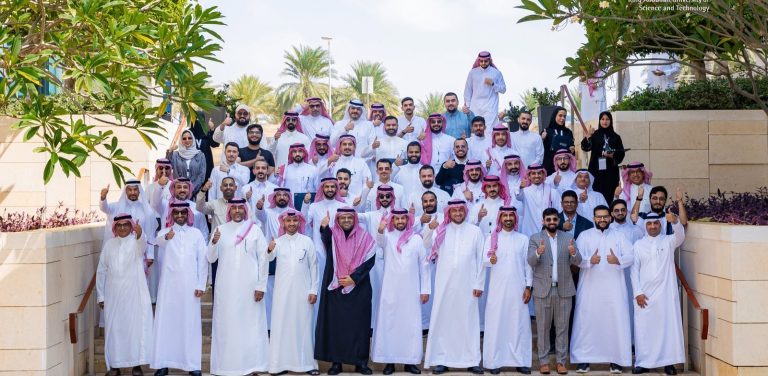
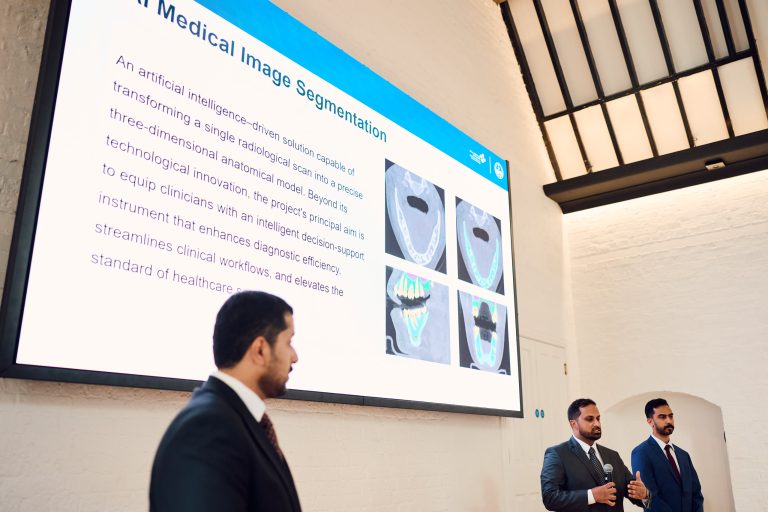
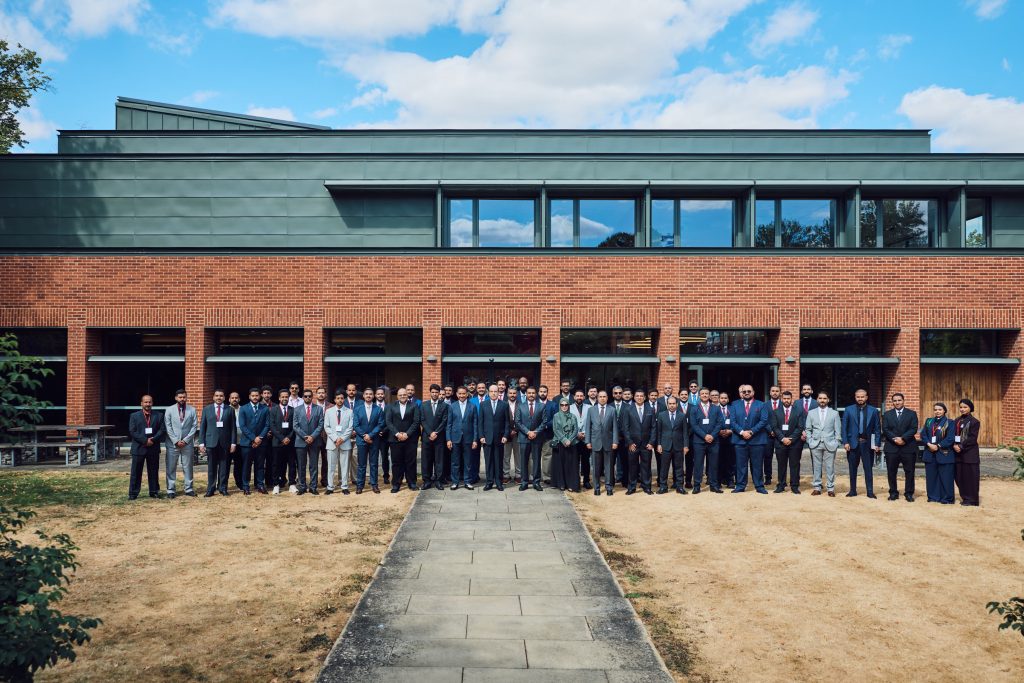
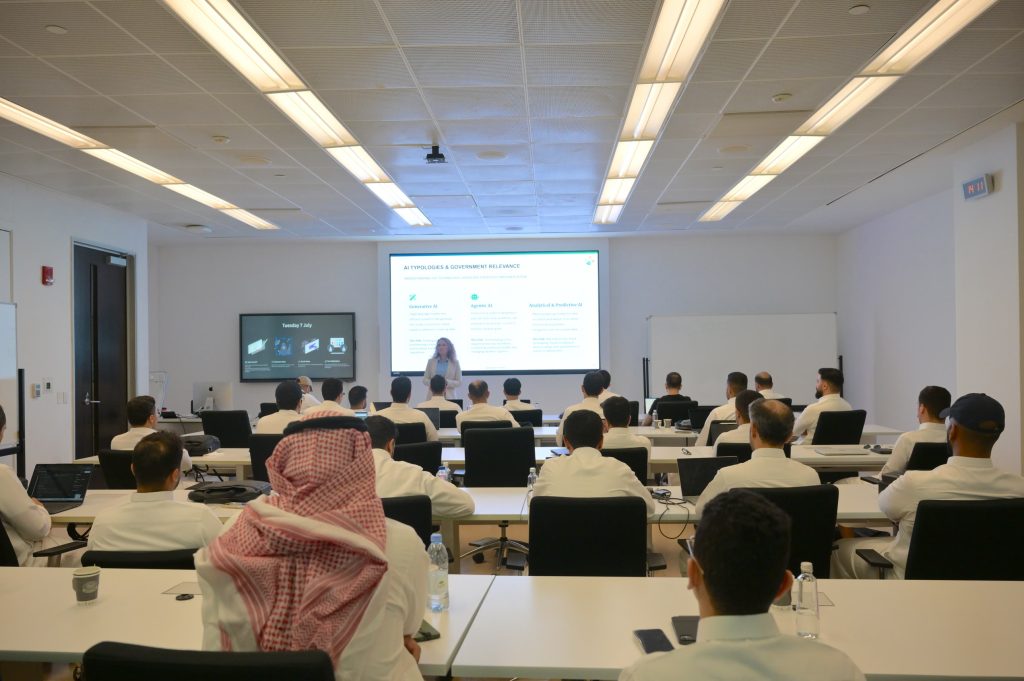
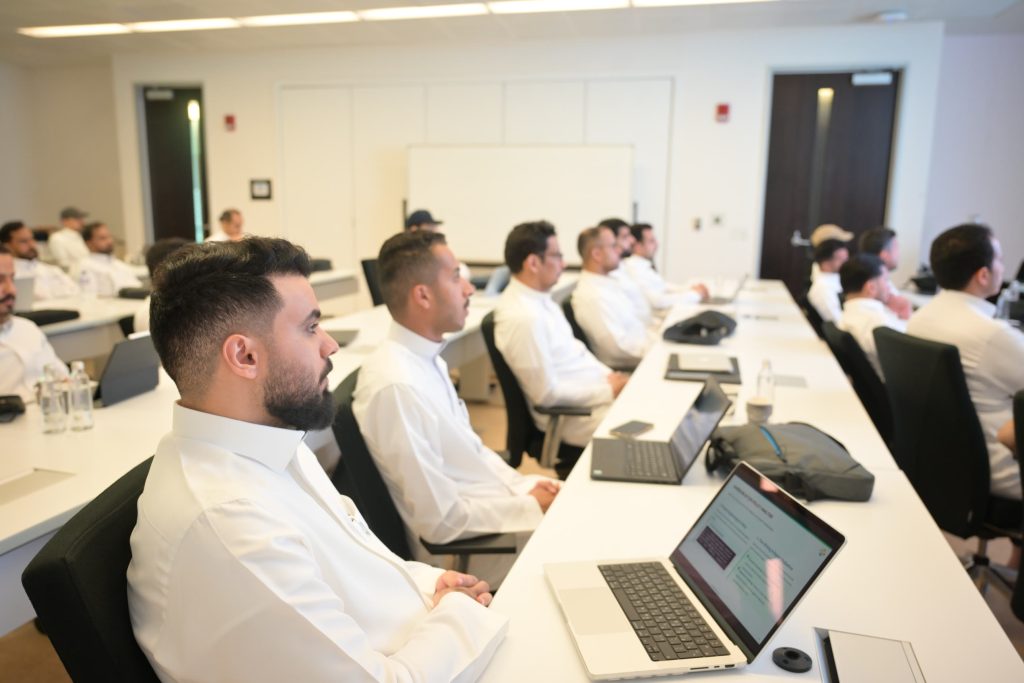
MEng in Cybersecurity students at the University of Cambridge, summer 2026, and master’s students at KAUST in July 2026.





Requirements
Who can join
A bachelor’s degreeIn cybersecurity, computer science or computer engineering, with a GPA of at least 3.2 out of 4 (or 4 out of 5).
Nominated by their organizationThrough the organization’s own internal process.
A bridging average above 90%The screening exam must be passed too.
EnglishSpoken and written, checked in an interview.
For organizations
Bring the program to your organization
Contact us
Send us a message through the contact form and choose “Degree programs for organizations”.
Plan the cohort
We agree with you on the schedule, the venue and the number of students.
Nominate employees
Your nominees prepare online, sit the screening exam and take the bridging program.
Start the program
The students admitted study on weekends at your venue, taught by KAUST faculty.
FAQ
Questions
Can I apply on my own?
No. KAUST offers this program to organizations for their employees. If your organization is interested, it can contact us.
Where and when are classes held?
On weekends, at the organization’s own venue. The summer term is at KAUST and the University of Cambridge.
Who teaches the program?
KAUST faculty. KAUST alone designs the curriculum and teaches it.
Is there a diploma in cybersecurity?
No. In cybersecurity, the bridging program leads only to the master’s degree.